Where It All Began: The Birthplace of Alpine Skiing
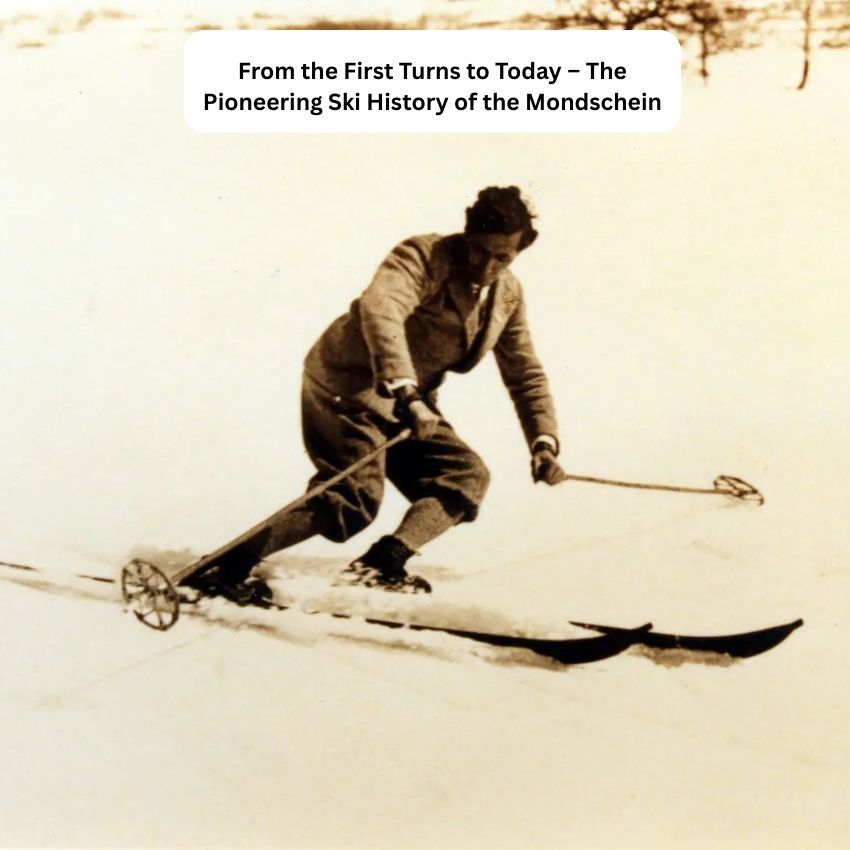
Before skiing became a sport, it was a way of survival. The people of the Arlberg region used long wooden planks to travel through snow-covered passes in winter. Over time, these practical movements turned into something more and a new form of expression and freedom on snow.
In the late 19th century, Stuben became one of the earliest centers of skiing in Europe. The steep slopes and ideal snow conditions drew the attention of adventurers who wanted to refine technique and explore the mountain in new ways.
And at the heart of this transformation stood the Mondschein, a mountain inn that offered warmth, conversation, and community to those who dared to imagine skiing as more than just transportation.

The Hannes Schneider Era: The Arlberg Technique is Born
If one person can be called the father of modern skiing, it is Hannes Schneider. Born in Stuben in 1890, Schneider changed the sport forever through his teaching and vision.
In his youth, Schneider spent countless hours studying how to move on skis more efficiently. He developed a new style that combined rhythm, balance, and flow, which became a method later known as the Arlberg Technique. It introduced the concept of snowplow turns, stem turns, and parallel turns, forming the foundation of ski instruction worldwide.
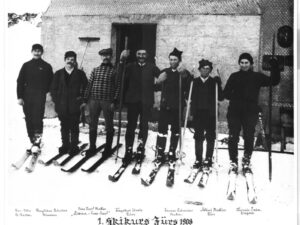
The Mondschein became one of the informal gathering places for Schneider and his fellow ski instructors. After long days on the slopes, they would meet at the inn to discuss technique, design, and the growing excitement surrounding skiing as a sport.
When Schneider founded the first professional ski school in St. Anton, his philosophy spread rapidly across Europe and then to the world. Yet the spirit of innovation that fueled it all was born here in Stuben and the Mondschein was part of that creative spark.
To this day, guests who stay in the old rooms can sense that history. The stories of those early winters still seem to linger in the wood and stone of the house.
Willi Walch: From the Mondschein to the World Stage
The pioneering legacy of the Mondschein continued into the 20th century through another remarkable figure, Willi Walch. Born in the hotel in 1912, Walch carried the local ski spirit onto the international stage.
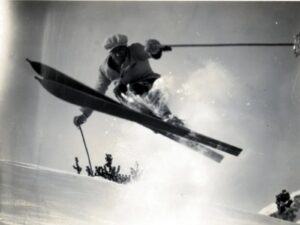
Willi became one of Austria’s first world-class ski racers, representing the country in major competitions. He won a silver medal in slalom at the 1937 World Championships in Chamonix and a bronze in Zakopane in 1939. These achievements marked the beginning of Austria’s rise as a global ski nation.
To many in Vorarlberg, Walch was not just an athlete but a symbol of the region’s determination and passion. His story reflected what the Mondschein had always stood for, which is the pillar of courage, skill, and a love for the mountains.
Even decades later, locals still speak proudly of the “boy from the Mondschein” who brought home medals and inspired a generation of Austrian skiers.
The Mondschein as a Meeting Place for Pioneers
Throughout the 20th century, the Mondschein remained a beloved meeting point for mountain guides, explorers, and ski instructors. It was a place where ideas and friendships formed over shared meals and long winter evenings.
Skiing was evolving quickly. Equipment improved, lifts appeared, and the Arlberg became a hub for international travelers eager to experience the magic of alpine skiing. Yet even as the sport modernized, the Mondschein held onto its roots.
Its walls carried the memories of wooden skis, handmade boots, and the first daring descents on untouched snow. For those who came to stay, it was not just a hotel but a living archive of skiing history.
The Connection to Modern Legends
The spirit of those early pioneers continues to attract new generations of athletes and innovators. Today, world-class skiers such as Travis Ganong, freeride icons like Glen Plake, and creative thinkers like Peter Kuba of K2 visit and stay at the Mondschein.
Each of them, in their own way, connects to the same pioneering energy that defined the early days. They come for the quiet, the authenticity, and the inspiration that only a place with such deep roots can offer.
The house that once welcomed ski teachers and racers now hosts freeriders, film crews, and innovators who are shaping the future of the sport. The story continues and is always evolving, yet always grounded in history.
A Living Legacy of the Arlberg
When you step into the Mondschein today, you step into more than 280 years of alpine history. Every detail tells a story. The old cellar where skis once dried by candlelight now hosts creative gatherings. The dining room still carries the echo of laughter from past generations of adventurers.
The hotel stands as a symbol of the Arlberg spirit; a blend of curiosity, hospitality, and respect for the mountains. It represents how tradition and innovation can live side by side, each strengthening the other.
Skiing may have become a global sport, but its soul remains here, in the quiet valleys of Stuben, where the first turns were made and the dream of gliding on snow became reality.
From Past to Present: The Journey Continues
Every skier who visits the Arlberg becomes part of a larger story that began centuries ago. Whether carving fresh tracks on the Albona or sharing stories at the Mondschein bar, you are walking in the footsteps of pioneers.
The hotel continues to honor its heritage through local partnerships, cultural events, and collaborations with modern athletes who value authenticity. It stands not only as a place to rest but as a reminder of how skiing connects people across generations.
From the first wooden skis to today’s high-tech equipment, from the early ski instructors to world champions, the spirit of innovation and adventure that began here in Stuben still shines brightly.
The Mondschein is living proof that history is not something of the past but it is something you can feel, experience, and carry forward.
FAQs
- Why is Stuben am Arlberg important in skiing history?
Stuben is considered one of the birthplaces of alpine skiing. The first ski techniques and schools that shaped the sport began here in the late 19th century. - What role did the Hotel Mondschein play in early skiing?
The Mondschein was a gathering place for ski pioneers, instructors, and explorers. It offered shelter, conversation, and collaboration that helped shape modern skiing. - Who was Hannes Schneider?
Hannes Schneider, born in Stuben, is known as the father of modern skiing. He developed the Arlberg Technique, which became the foundation for ski instruction worldwide. - What is the Arlberg Technique?
It is a method of ski teaching that introduced the snowplow, stem, and parallel turns. It created a systematic way to learn skiing and remains influential today. - Who was Willi Walch?
Willi Walch was born in the Mondschein in 1912 and became one of Austria’s first international ski champions. He won medals in the 1937 and 1939 World Championships. - How does the Mondschein connect to modern skiing?
The hotel continues to host world-class skiers, freeriders, and innovators who draw inspiration from its history and from the surrounding Arlberg mountains. - Can guests learn about skiing history at the Mondschein?
Yes. Guests can explore local exhibits, enjoy storytelling evenings, and visit nearby St. Anton to see historical displays celebrating the roots of alpine skiing. - What is special about the Albona slopes near Stuben?
The Albona slopes offer pristine snow, fewer crowds, and direct access to the Arlberg ski area. They are known for their historical significance and natural beauty. - How has skiing evolved since the early days in Stuben?
Skiing evolved from wooden skis and wool clothing to high-tech gear and global competition, but the passion and spirit that started in Stuben remain unchanged. - Why does the Mondschein call itself the home of skiing legends?
Because it has hosted pioneers like Hannes Schneider, champions like Willi Walch, and today’s athletes who continue to push the limits of the sport.